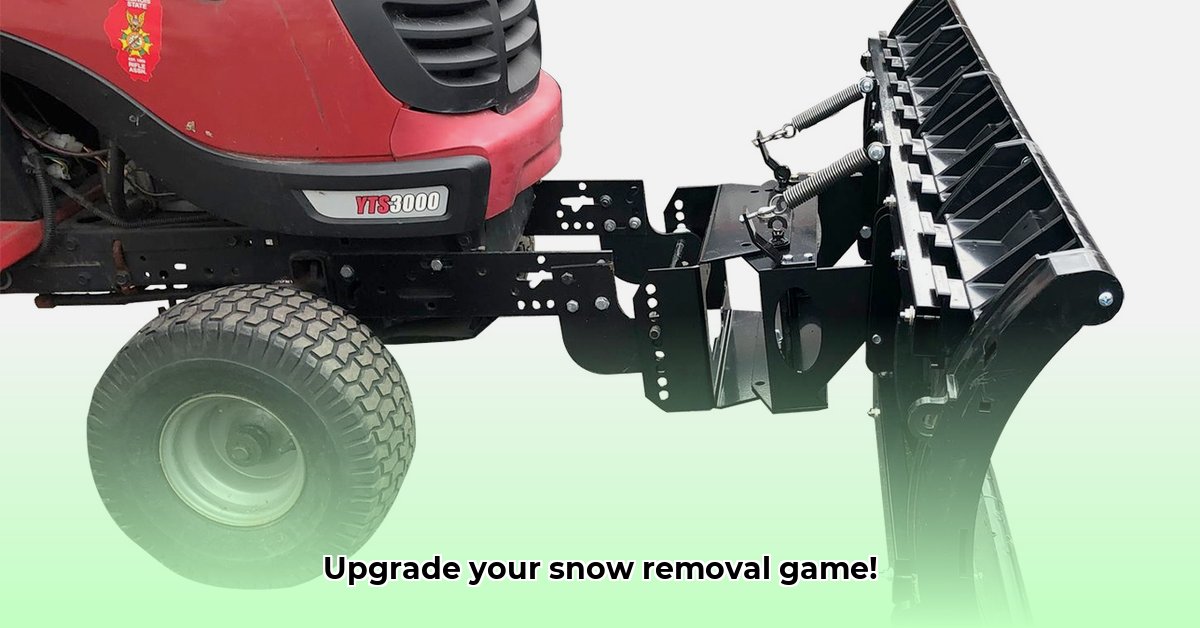
Understanding Snow Plows for Lawn Tractors
Winter's arrival often brings the dreaded chore of snow removal. But your lawn tractor, with the right attachment, can transform this arduous task into a manageable one. A snow plow for your lawn tractor offers significant time and effort savings compared to manual shoveling, especially for larger driveways or walkways. This guide provides a comprehensive overview, helping you choose, install, operate, and maintain a snow plow effectively and safely. We’ll cover everything from selecting the right plow for your specific needs to troubleshooting common problems. For more detailed information, check out this helpful resource on tractor snow plows.
Choosing the Right Snow Plow: A Detailed Guide
Selecting the appropriate snow plow hinges on several key factors, ensuring optimal performance and preventing damage to your lawn tractor.
1. Tractor Horsepower and Weight Capacity: This is paramount! Never exceed your tractor's recommended weight capacity (usually found in your owner's manual). Overloading can severely damage your tractor's transmission and other components. A lighter-duty plow might suffice for light, infrequent snowfalls, while heavier, more powerful tractors can handle larger, heavier plows for more substantial snow removal needs. Remember, a properly matched plow ensures efficient snow removal without jeopardizing your tractor.
2. Plow Blade Width and Your Property's Dimensions: The plow's width directly impacts efficiency. A wider blade reduces the number of passes needed, but requires greater power from your tractor. A narrower blade is ideal for tighter spaces but may necessitate more passes to clear the same area. Measure your driveway and walkways to determine the optimal blade width to balance efficiency and maneuverability.
3. Blade Material: Steel vs. Poly (Polyethylene): Steel blades are renowned for their durability and strength, making them suitable for heavy, frequent snowfalls. However, they are more susceptible to rust and require regular maintenance. Poly (polyethylene) blades offer corrosion resistance and lighter weight, but might be less resilient to impact damage. The choice depends on your local climate and snow conditions—heavy, frequent snow calls for steel; lighter snowfalls might favor poly.
4. Snow Type and Frequency: Adapting to Your Climate: Heavy, wet snow demands a stronger, heavier-duty plow than light, fluffy snow. Consider your local climate and typical snowfall patterns to choose a plow that can effectively handle the conditions. Daily snow removal requires a different approach (and potentially a more robust plow) than occasional snow clearing.
5. Budgetary Considerations: Snow plows vary considerably in price, reflecting differences in features, materials, and brand reputation. Determine your budget upfront to avoid exceeding your financial limits and ensure your choice remains practical.
Straight Blades vs. V-Plows: A Comparative Analysis
The choice between a straight blade and a V-plow significantly impacts your snow removal efficiency. Straight blades are simpler, ideal for smaller areas and light snow. V-plows, offering increased maneuverability and snow-throwing capabilities, are better suited for larger areas and heavier snowfalls. Consider your specific needs and driveway size when making this crucial decision.
Installing Your Snow Plow: A Step-by-Step Instructional Guide
Safety Precautions: Always prioritize safety. Turn off your lawn tractor, engage the parking brake, and disconnect the PTO (Power Take-Off) before attempting any installation or maintenance.
Alignment: Carefully align the plow's mounting brackets with your tractor's front hitch attachment points. Accurate alignment is critical for a secure and trouble-free installation.
Fastening: Securely attach the plow using the provided pins, bolts, or other fastening mechanisms. Follow the manufacturer's instructions precisely.
Tightening: Once all components are in place, firmly tighten all fasteners to the manufacturer's specified torque values. A loose connection can lead to instability and potential detachment during operation.
Verification: Before operating the tractor, manually move the plow up and down to verify proper function and stability. Address any issues immediately.
Operating and Maintaining Your Snow Plow for Optimal Performance
Safe and effective operation significantly extends the life of your snow plow.
Speed Control: Maintain a slow, steady pace during snow removal. Avoid jerky movements or sudden changes in speed. Adjust your speed according to snow conditions—slower for heavier snow, slightly faster for lighter snow.
Snow Removal Techniques: Adapt your technique to different snow types. Heavier, wetter snow may require multiple passes at a slower speed. Lighter snow can generally be removed more quickly.
Post-Use Cleaning: Thoroughly clean the plow blade after each use, removing any accumulated snow, ice, or debris. This prevents corrosion and ensures smooth operation in subsequent uses.
Storage: Proper storage is vital for longevity. Store the plow in a clean, dry location, ideally covered to protect it from the elements. Lubricate moving parts as needed.
Troubleshooting Common Snow Plow Problems: Solutions and Preventative Measures
Blade Binding: If the blade becomes stuck, carefully inspect for obstructions like rocks, ice, or packed snow. Clear any debris and ensure proper blade alignment.
Hydraulic Issues (if applicable): Check hydraulic fluid levels and look for leaks. Consult your owner's manual for troubleshooting steps specific to your plow's hydraulic system. Remember regular lubrication is key to preventing hydraulic failures.
Remember, always consult your lawn tractor's and snow plow's owner's manuals for detailed instructions and specific safety precautions. Taking preventative measures and performing regular maintenance will keep your snow plow functioning optimally for years to come. By following this comprehensive guide, you are well-equipped to conquer winter's challenges effectively and safely.